Over 25 YEARS in the Two-Way Radio Industry!

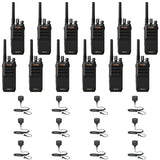
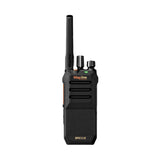
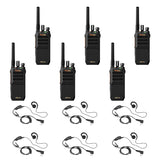
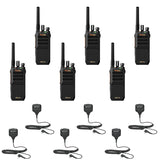
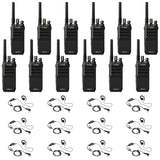
Motorola BPR50dx 12 Pack Bundle with HKLN4606 Speaker Mics

$6,119.76 $6,335.76

UHF Radio or VHF Radio:
Programming:

What's in the Box?

  • 12x Motorola BPR50dx Two-Way Radios
  • 12x 2,200 mAh Li-Ion Batteries (PMNN4579)
  • 12x Belt Clips (PMLN7052)
  • 12x USB-C Rapid Chargers (PMPN4173)
  • 12x HKLN4606 Speaker Microphones
  • 12x User Manuals and Quick-Start Guides

Twelve people. Twelve radios on belt clips. Nobody can hear them.

A radio at the hip is fine until the floor gets busy. Then nobody hears it. Calls get missed, instructions get repeated, and your team starts shouting across rooms because the message never landed the first time. With twelve people working at once, every missed call multiplies. Time wasted. Money wasted. Customers walking away because nobody answered fast enough.

The Motorola BPR50dx 12-Pack Bundle with HKLN4606 Speaker Microphones outfits your entire crew with hands-free communication that actually gets heard. Twelve rugged two-way radios. Twelve lapel-mounted speaker mics with push-to-talk built right in. Your team hears every call, talks back instantly, and keeps moving. No fumbling for a handset. No missed messages because the radio was buried on a belt clip.

This isn't a tech upgrade for the sake of it. It's the difference between a crew that reacts and a crew that runs in sync. Between a floor that runs on shouting and one that runs on clarity.

What Makes This Radio Bundle Different

Speaker Mic Where It Matters

The HKLN4606 clips to a lapel or shoulder strap, putting the speaker and PTT button right where your team can hear and use them. No more reaching down to a belt clip or pulling a radio out of a pocket every time someone calls.

Built to Scale With Your Crew

Twelve radios is enough to cover an entire department, an entire shift, or an entire venue. One investment outfits your whole team without piecing it together one radio at a time.

Analog Today, Digital When You're Ready

The BPR50dx speaks both languages: analog and DMR digital. Run alongside your existing fleet today and migrate to digital on your timeline. No forced upgrade.

A Battery That Outlasts the Shift

23 hours of talk time in digital mode. That's a double shift and then some. No mid-day battery swaps, no dead radios at 3pm when your crew needs them most.

USB-C. Finally.

No more proprietary chargers that only fit one model. Plug into any USB-C source, or use the included desktop rapid chargers for faster turnaround between shifts.

Built for Canadian Conditions

IP55 water and dust resistance. MIL-STD 810 drop-tested. Rain on a loading dock, sawdust on a jobsite, a 4-foot fall onto concrete. These radios keep working.

Loud, Clear Audio in Noisy Environments

3 watts of output with built-in noise cancellation. Kitchens, warehouses, event floors, construction sites. Your team hears every word the first time, not the third.

64 Channels, 4 Zones, Zero Cross-Talk

Put maintenance on one channel, front-of-house on another, security on a third, supervisors on a fourth. With twelve radios in play, channel separation is what keeps the conversation clean.

Safety Features That Actually Matter

Emergency button. Lone Worker mode. Remote monitoring. If your people work overnight, in isolated areas, or across sprawling sites, these aren't nice-to-haves. They're how you meet Canadian workplace safety obligations.

Why Choose Speaker Microphones Over Earpieces?

Speaker mics work better than earpieces in roles where your team is constantly handing off, putting on and taking off gear, or moving in and out of high-touch customer interactions. There's nothing to fit in your ear, nothing to clean between shifts, and nothing that gets in the way when staff need to hear what's happening around them.

For larger crews where radios get reassigned across shifts, speaker mics are the cleaner solution. No fitting, no sanitizing, no drawer full of foreign earpieces.

Not Sure Which Frequency? Here's the Short Version.
UHF (400-470 MHz) Better for indoor environments: retail floors, hotels, warehouses, hospitals.
VHF (136-174 MHz) Better for wide-open outdoor areas: jobsites, farms, festivals, parking operations.

Who's Already Using The BPR50dx

Retail and grocery teams use them to coordinate stock pulls and floor coverage without overhead paging that annoys every customer in the building.

Hotels and hospitality operations keep front desk, housekeeping, maintenance, and security connected without a single guest-facing disruption.

Construction crews and trades stay linked across multi-level sites, especially in basements, parkades, and concrete structures where cell signal disappears.

Schools and education staff connect teachers, administrators, custodians, and support staff across campuses without relying on cell coverage or PA systems.

Event venues and property managers run coordinated operations across large footprints without paying per-user cell fees that balloon every time you add seasonal staff.

Security teams respond faster with shoulder-mounted mics that put the radio right where it's needed, even when their hands are full.

The Real Cost Isn't the Radios. It's What Happens Without Them.

Twelve cell phones cost you twelve monthly bills, forever. And they fail the second your team steps into a stairwell, a freezer, or a basement. The BPR50dx runs on dedicated business frequencies. One investment. No monthly bills. Reliable coverage where your crew actually works, not just where there's a cell tower.

Frequently Asked Questions

What is the difference between the UHF and VHF versions?

UHF (400-470 MHz) performs better indoors, including retail stores, hotels, and warehouses. VHF (136-174 MHz) is better suited for open outdoor areas like construction sites, farms, and event venues.

Why choose a speaker microphone instead of an earpiece?

Speaker mics are easier to share between staff, faster to put on, and don't require fitting or cleaning between users. They're ideal for high-turnover roles, public-facing teams, and environments where staff need to stay aware of what's happening around them.

Can I use these alongside radios I already own?

Yes. The BPR50dx supports both analog and digital (DMR) modes, so it integrates with most existing Motorola and compatible two-way radio fleets without replacing your current equipment.

How long does the battery last on a full charge?

Up to 23 hours of talk time in digital mode and 18 hours in analog mode. For most operations, that covers a full shift and then some without needing a mid-day battery swap. Each radio also includes USB-C charging, so topping off between shifts is fast and convenient.

Do these radios work in basements, freezers, and stairwells where cell phones fail?

Yes. Two-way radios communicate directly between units on dedicated business frequencies, so they don't rely on cell towers, Wi-Fi, or external infrastructure. That means reliable communication in basements, parkades, freezers, stairwells, loading docks, and concrete structures where cell signal typically drops or disappears entirely.

12 BPR50dx with 12 HKLN4606 on a white background
Motorola Solutions

Motorola BPR50dx 12 Pack Bundle with HKLN4606 Speaker Mics

$6,119.76 $6,335.76

Twelve people. Twelve radios on belt clips. Nobody can hear them.

A radio at the hip is fine until the floor gets busy. Then nobody hears it. Calls get missed, instructions get repeated, and your team starts shouting across rooms because the message never landed the first time. With twelve people working at once, every missed call multiplies. Time wasted. Money wasted. Customers walking away because nobody answered fast enough.

The Motorola BPR50dx 12-Pack Bundle with HKLN4606 Speaker Microphones outfits your entire crew with hands-free communication that actually gets heard. Twelve rugged two-way radios. Twelve lapel-mounted speaker mics with push-to-talk built right in. Your team hears every call, talks back instantly, and keeps moving. No fumbling for a handset. No missed messages because the radio was buried on a belt clip.

This isn't a tech upgrade for the sake of it. It's the difference between a crew that reacts and a crew that runs in sync. Between a floor that runs on shouting and one that runs on clarity.

What Makes This Radio Bundle Different

Speaker Mic Where It Matters

The HKLN4606 clips to a lapel or shoulder strap, putting the speaker and PTT button right where your team can hear and use them. No more reaching down to a belt clip or pulling a radio out of a pocket every time someone calls.

Built to Scale With Your Crew

Twelve radios is enough to cover an entire department, an entire shift, or an entire venue. One investment outfits your whole team without piecing it together one radio at a time.

Analog Today, Digital When You're Ready

The BPR50dx speaks both languages: analog and DMR digital. Run alongside your existing fleet today and migrate to digital on your timeline. No forced upgrade.

A Battery That Outlasts the Shift

23 hours of talk time in digital mode. That's a double shift and then some. No mid-day battery swaps, no dead radios at 3pm when your crew needs them most.

USB-C. Finally.

No more proprietary chargers that only fit one model. Plug into any USB-C source, or use the included desktop rapid chargers for faster turnaround between shifts.

Built for Canadian Conditions

IP55 water and dust resistance. MIL-STD 810 drop-tested. Rain on a loading dock, sawdust on a jobsite, a 4-foot fall onto concrete. These radios keep working.

Loud, Clear Audio in Noisy Environments

3 watts of output with built-in noise cancellation. Kitchens, warehouses, event floors, construction sites. Your team hears every word the first time, not the third.

64 Channels, 4 Zones, Zero Cross-Talk

Put maintenance on one channel, front-of-house on another, security on a third, supervisors on a fourth. With twelve radios in play, channel separation is what keeps the conversation clean.

Safety Features That Actually Matter

Emergency button. Lone Worker mode. Remote monitoring. If your people work overnight, in isolated areas, or across sprawling sites, these aren't nice-to-haves. They're how you meet Canadian workplace safety obligations.

Why Choose Speaker Microphones Over Earpieces?

Speaker mics work better than earpieces in roles where your team is constantly handing off, putting on and taking off gear, or moving in and out of high-touch customer interactions. There's nothing to fit in your ear, nothing to clean between shifts, and nothing that gets in the way when staff need to hear what's happening around them.

For larger crews where radios get reassigned across shifts, speaker mics are the cleaner solution. No fitting, no sanitizing, no drawer full of foreign earpieces.

Not Sure Which Frequency? Here's the Short Version.
UHF (400-470 MHz) Better for indoor environments: retail floors, hotels, warehouses, hospitals.
VHF (136-174 MHz) Better for wide-open outdoor areas: jobsites, farms, festivals, parking operations.

Who's Already Using The BPR50dx

Retail and grocery teams use them to coordinate stock pulls and floor coverage without overhead paging that annoys every customer in the building.

Hotels and hospitality operations keep front desk, housekeeping, maintenance, and security connected without a single guest-facing disruption.

Construction crews and trades stay linked across multi-level sites, especially in basements, parkades, and concrete structures where cell signal disappears.

Schools and education staff connect teachers, administrators, custodians, and support staff across campuses without relying on cell coverage or PA systems.

Event venues and property managers run coordinated operations across large footprints without paying per-user cell fees that balloon every time you add seasonal staff.

Security teams respond faster with shoulder-mounted mics that put the radio right where it's needed, even when their hands are full.

The Real Cost Isn't the Radios. It's What Happens Without Them.

Twelve cell phones cost you twelve monthly bills, forever. And they fail the second your team steps into a stairwell, a freezer, or a basement. The BPR50dx runs on dedicated business frequencies. One investment. No monthly bills. Reliable coverage where your crew actually works, not just where there's a cell tower.

Frequently Asked Questions

What is the difference between the UHF and VHF versions?

UHF (400-470 MHz) performs better indoors, including retail stores, hotels, and warehouses. VHF (136-174 MHz) is better suited for open outdoor areas like construction sites, farms, and event venues.

Why choose a speaker microphone instead of an earpiece?

Speaker mics are easier to share between staff, faster to put on, and don't require fitting or cleaning between users. They're ideal for high-turnover roles, public-facing teams, and environments where staff need to stay aware of what's happening around them.

Can I use these alongside radios I already own?

Yes. The BPR50dx supports both analog and digital (DMR) modes, so it integrates with most existing Motorola and compatible two-way radio fleets without replacing your current equipment.

How long does the battery last on a full charge?

Up to 23 hours of talk time in digital mode and 18 hours in analog mode. For most operations, that covers a full shift and then some without needing a mid-day battery swap. Each radio also includes USB-C charging, so topping off between shifts is fast and convenient.

Do these radios work in basements, freezers, and stairwells where cell phones fail?

Yes. Two-way radios communicate directly between units on dedicated business frequencies, so they don't rely on cell towers, Wi-Fi, or external infrastructure. That means reliable communication in basements, parkades, freezers, stairwells, loading docks, and concrete structures where cell signal typically drops or disappears entirely.

UHF Radio or VHF Radio

  • UHF 400-470 MHz
  • VHF 136-174
View product
Liquid error (snippets/call-for-price line 23): include usage is not allowed in this context